Office Clearance in Finsbury Park

We provide office clearance in Finsbury Park for workplaces that need desks, chairs, filing, electrical equipment and general office contents removed in an orderly way. The service is designed to help businesses, landlords and managing agents clear working spaces without turning the process into a disruption. Whether you are preparing for a move, reducing surplus items or emptying a suite after a lease change, we handle the practical removal work with a clear focus on access, sorting and responsible disposal.
Our approach is built around careful clearances rather than a one-size-fits-all load-and-go job. We can deal with individual items, partial room clearances and larger office contents, while keeping reusable goods separate where appropriate. In practice that means looking at what should be removed, what may be suitable for reuse, and what requires recycling or disposal. If you are planning ahead, a brief conversation is often enough to shape the right scope and avoid unnecessary removals.
The easiest way to begin is to request a quotation with a short description of the items and the layout involved. If you already know the size of the task, that helps us match the clearance to the space and the access available. When you are ready, make contact and we will help you work out the next step.
Office furniture, fittings and equipment
Many office clearances begin with bulky furniture. Desks, pedestal drawers, meeting tables, reception units, cupboards and shelving can quickly dominate a room once they are no longer needed. We remove these items with attention to how they are fixed, moved and carried out of the building, especially where corridors, lifts or stairwells are involved. If furniture can be dismantled to make the job safer or more efficient, that is often the practical route, provided it is handled in a controlled way.
Alongside furniture, offices often contain a mixture of electrical and operational items that need separate handling. Monitors, printers, phones, small appliances, cables and storage equipment may all be part of the same clearance. Where sensible, we keep different material types separated so that recycling routes can be used appropriately. This is particularly helpful when the job includes a combination of old office kit, archived fittings and redundant stock that must be taken away together but processed in different ways.
When space is tight, a clear sequence matters. For example, removing loose items first can open access to larger furniture, while taking out redundant fittings early can reduce obstruction for the rest of the clearance. Good planning is often less about elaborate preparation and more about knowing what should stay and what should go. If there are items you want retained for reuse, we can work around those choices so that the remaining clearance stays focused and efficient.
Workplace clearing for moves, downsizing and changes of use

Office clearance in Finsbury Park is often needed at a transition point rather than during routine operations. A business may be moving to smaller premises, leaving a serviced suite, refreshing an outdated layout or clearing rooms that have become storage areas over time. In each case, the clearance needs to fit the practical aim of the project. Some customers want a near-empty shell; others only need a few categories of item removed before decorators, contractors or incoming occupiers take over.
To keep the work manageable, it helps to think in terms of zones and priorities. A boardroom, storage cupboard, staff kitchen and open-plan area may all require different treatment. One section might contain furniture only, while another includes paperwork, archive boxes or mixed waste. We can work through those areas in a sensible order so the clearance supports the wider schedule, rather than competing with it. That makes it easier to hand over the space in a condition that suits the next stage.
Useful information to include when requesting a quotation can be kept simple:
- the type of office or workspace involved
- the main items or materials to be removed
- the number of floors, lifts or access points
- any items that must stay in place
- preferred timing or building access constraints
Document, archive and mixed-content clearances
Office environments rarely contain furniture alone. Paper archives, folders, boxed records and mixed storage often build up in back rooms, cupboards and underused areas. A clearance of this type needs more than simple lifting and carrying; it needs sorting so that different material streams can be managed appropriately. We can remove mixed office contents in a structured way, paying attention to whether items are general office waste, reusable equipment or material that needs a separate disposal route.
Where cabinets, shelves or storage rooms hold a blend of old stationery, loose paperwork and varied contents, the practical goal is to clear the space without losing track of what is being removed. That is particularly important when the room includes both dated office equipment and everyday consumables. If you are separating items before the clearance, it is usually best to keep any records you want to retain clearly apart from the material to be taken away. That simple step makes the clearance more predictable and reduces unnecessary handling.
If your premises include more than one storage area, the job can be approached in stages. We may clear the most crowded room first, then move on to lighter areas once access improves. This kind of phased work suits offices that still need to function while the clearance takes place. Practical sequencing helps keep the process orderly, especially where the aim is to free space while preserving a working environment around it.
Pricing factors and practical quotation details
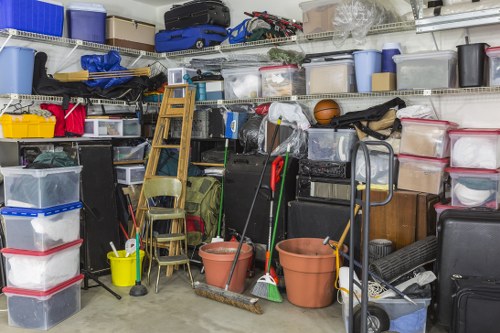 Office clearance costs are usually influenced by the amount and type of material involved, the ease of access and the time required to complete the job. A room full of small items can take different effort from a smaller number of heavy desks or filing cabinets. Access matters too: upper floors, restricted loading points, narrow stairs or limited parking can change the logistics. When those factors are clear from the outset, the quotation can be more accurate and better matched to the actual work.
It also helps to distinguish between items that are straightforward to remove and items that need extra care. For example, awkwardly placed furniture, fixed storage and mixed equipment may require more handling than open-floor items. If the clearance includes a variety of contents, an itemised description is often better than a broad estimate. That said, you do not need to write a full inventory before making contact; a practical summary is usually enough to start the process and refine the scope from there.
For many customers, the most efficient next step is simply to gather a few key details and ask for a quotation. A short note about the rooms involved, the main contents and any access limits gives us what we need to discuss the work sensibly. Clear information at this stage makes it easier to arrange a clearance that fits the premises and the timetable.
Furniture removal, reuse and recycling choices
Not every office item has to be treated in the same way. Some furniture may still be usable, while other pieces are worn out or unsuitable for continued use. A sensible office clearance takes those differences into account. Where items are in a condition that supports reuse, separating them from general waste can be worthwhile. Where they are no longer practical to keep, they can be removed with the rest of the clearance and directed into the correct disposal route.
Recycling is often an important part of a larger office clearance because workplaces tend to contain mixed materials. Metal frames, wooden furniture, plastics, packaging and electronic equipment may all appear in one job. Handling them carefully improves the quality of the clearance and reduces the chance of everything being treated as one undifferentiated load. That is particularly relevant in larger offices where a strong sorting process helps avoid unnecessary waste and supports more responsible disposal decisions.
When a business is clearing multiple rooms, it is usually best to decide in advance whether certain items are being kept, reused elsewhere or removed altogether. That simple distinction can save time on site and make the clearance feel much more controlled. If you are unsure how to categorise a particular item, we can work through the options with you before the job begins rather than making assumptions on the day.
About Finsbury Park
Finsbury Park is an area in north London shaped by both transport and dense urban development. The park itself, which gives the district its name, opened in the mid-19th century and remains one of the best-known public green spaces in the neighbourhood. It sits near a busy junction of roads and railways, and the wider area has long been associated with movement between central London, north London and the surrounding districts. The station complex is a major interchange, linking Underground and rail services and helping to anchor the local street pattern around Stroud Green Road, Seven Sisters Road and Blackstock Road. That transport focus sits alongside a mixture of residential streets, independent shops and larger mixed-use blocks, giving the area a layered urban character rather than a single uniform centre.
The district also has a varied built environment. Victorian and Edwardian housing survives in many streets, often alongside later infill development and apartment buildings. Around the park, the landscape opens out a little from the tighter terraces and commercial frontages found elsewhere nearby. The green space itself has sports facilities, tree-lined paths and open lawns, making it an important local landmark as well as a public amenity. Cultural life in the area is supported by music venues, cafés and community spaces, and the mix of long-established streets and recent regeneration gives Finsbury Park a character that is both practical and well connected. The result is a place where everyday city life, public open space and transport infrastructure meet in a relatively compact part of London.
Office clearances for different workplace layouts
![A large pile of discarded papers, including sheets of white paper, printed documents, and file pages, is shown outdoors, positioned on a surface near a backdrop of fallen leaves and soil. The papers are crumpled, torn, and overlapping, with some edges curled or torn. The scene appears to be at a rubbish collection site or area designated for waste disposal, reflecting typical office clearance debris. The background confirms an outdoor environment with natural ground, and the overall scene emphasizes the accumulation of waste materials associated with professional or office clearance services. The lighting is natural, casting soft shadows across the papers and highlighting their various textures and the paper's slight sheen. This detailed visual description supports understanding of rubbish removal tasks that [COMPANY_NAME] offers in Finsbury Park, with the scene capturing the type of waste managed during office clearance operations in the local area, suggesting a focus on paper waste disposal.](/pub/_photos/rubbish/f1489859488.jpg)
Offices are rarely arranged in exactly the same way, so the clearance needs to reflect the layout. A small front office, a shared workspace, a back room used for storage and a larger open-plan floor may each involve different obstacles and item types. We can adapt the work to those conditions, clearing the most obstructive items first where needed and then moving through the remaining contents in a steady sequence. This keeps the task organised and reduces the chance of items being shifted more than once.
Some workplaces are straightforward with clear access and open floor areas, while others involve reception counters, partitioned rooms, built-in units or mixed-use spaces. In the latter case, the clearance may need to be approached with more care so that fixed fittings are not damaged and retained items are not disturbed. That is especially important when the office is still partly in use. A measured method allows the space to keep functioning while the redundant contents are gradually removed.
When you are preparing for a clearance, a few basic checks can make the process easier without turning it into a large project. Confirm which rooms are included, identify any items that must remain, and make sure access routes are available on the agreed day. Simple coordination like this keeps the focus on the clearance itself and helps the job proceed in an orderly way.
Commercial premises, landlords and agent-led clearances
Office clearance is not only for businesses that are moving out. Landlords, agents and property managers also need reliable removal work when a suite has been vacated, when furniture has been abandoned or when a unit must be prepared for new occupation. In those cases, the clearance may need to handle a mixture of left-behind contents, accumulated waste and items that no longer belong in the space. The aim is to restore usability without creating a further problem for whoever takes on the premises next.
Different commercial settings can call for different priorities. A managed office building may require a tidy, controlled clearance with attention to shared corridors and common areas, while a stand-alone premises may be focused more on speed and completeness. Either way, the practical steps remain similar: remove the redundant contents, separate items where possible, and ensure the remaining area is ready for the next stage of use. That structure helps keep the work aligned with the property’s condition and the building’s access rules.
Where a clearance includes several categories of contents, it can be sensible to group them in advance. A list of furniture, electrical items, loose waste and anything that should be preserved gives the job a clearer framework. Organised input often leads to a more accurate quotation and a smoother clearance, especially when the premises contain a broad mix of office materials.
How the clearance is arranged

Arranging an office clearance is usually straightforward once the main scope is clear. We begin by understanding the spaces involved, the items to be removed and any access considerations that might affect how the work is carried out. From there, the clearance can be planned in a way that suits the premises, whether the task involves a single room or a larger set of offices. The aim is to keep the process practical and well matched to the building rather than forcing the same method onto every job.
If the office contains a mixture of bulky items and smaller contents, it often makes sense to think about the order in which the work should happen. Heavy furniture may need to come out first, while smaller contents can be gathered and removed as the space opens up. That approach helps reduce handling complications and can make the whole clearance feel more organised. It also gives you a clearer sense of how the room will look as the work progresses, which is useful when other contractors are due to follow.
When you are ready, ask for a quotation and let us know what needs to be cleared. A short summary is enough to begin, and if there are additional details that matter, we can factor them into the discussion. The sooner the scope is defined, the easier it is to plan a clearance that works for the office and the timetable.
Other office clearance work and related removals
Office clearance sometimes overlaps with other removal tasks, especially where the premises also contain storage areas, furniture or general waste. In those situations, the job may combine elements of room clearing, furniture removal and mixed-content disposal. The task remains the same at its core: remove what is no longer needed and leave the space in a more workable condition. By keeping the approach flexible, we can deal with offices that have built up a varied collection of contents over time.
That flexibility is useful when the work extends beyond desks and chairs. Filing cabinets, shelving, loose office supplies, packaging and redundant equipment often appear together in one clearance, and it is usually more efficient to treat them as a coordinated project rather than as separate jobs. This is where a clear scope makes a difference: it helps define what belongs in the clearance and what should remain in place. A measured plan avoids confusion and keeps the job focused on the right items.
If you are comparing options or deciding how much of the premises should be cleared, it helps to think in terms of outcome rather than item count alone. What needs to happen to the space? That question often gives the best starting point for a sensible quotation and a practical arrangement. For many customers, a brief call or message is enough to move from uncertainty to a workable plan.