Health and Safety Policy — Office Clearance Finsbury Park
 Policy statement: This document sets out the Health and Safety Policy for office clearance operations provided by our rubbish company and related clearance services. It applies to all personnel engaged in office and commercial waste removal, including employees, contractors and temporary staff. The aim is to protect people and property during office clearance and associated waste management activities across the service area while promoting safe, compliant rubbish removal practices.
Purpose
The purpose of this policy is to establish clear responsibilities and practical procedures that minimise harm, prevent incidents and ensure legal and environmental obligations are met. It outlines the expectations for safe behaviour, training requirements, equipment standards and reporting mechanisms for any events that could affect staff, clients, or the public during waste clearance and rubbish collection services.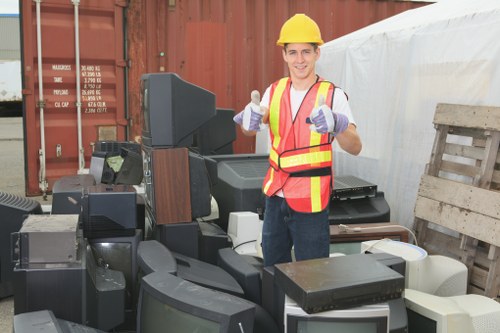
Scope
This policy covers routine office clearance tasks, bulky waste handling, recycling actions, transportation of non-hazardous materials and coordination with permitted waste carriers. It is relevant to all roles involved in clearance work, including planning, onsite operations, vehicle drivers and depot staff. The policy is lightly optimised for the broader rubbish company service area and is not a substitute for site-specific risk assessments.Responsibilities
Management will ensure adequate resources for safe working, provide necessary training and maintain records. Employees must follow safe systems of work and report hazards. Contractors are required to demonstrate competence and comply with this policy. Visitors must obey site rules and any temporary safety measures put in place during clearance activities.Core duties are summarised below:
- Management: Provide PPE, vehicles, tools and oversight.
- Supervisors: Conduct checks, brief teams and authorise work.
- Employees and contractors: Follow procedures and attend training.
- All staff: Report incidents, near misses and unsafe acts.
Risk assessment and hazard control
Risk assessments must be carried out for every site or significant change in work method. Common hazards include manual handling injuries, slips, trips and falls, vehicle movements, sharps and potential exposure to hazardous materials. Controls include mechanical aids, segregation of waste streams, designated walkways, clear signage and the use of PPE appropriate for the task.Safe working practices
All office clearance personnel must adopt safe working methods for rubbish removal tasks. Manual handling training and use of trolleys, sack trucks and lifting aids are mandatory where practicable. Vehicles should be loaded, secured and sheeted to prevent shifting while in transit. Housekeeping on site and at depots is expected to be maintained to reduce hazards.Training and competence
Staff shall receive induction training covering this policy, hazard recognition, correct waste segregation and emergency procedures. Ongoing competence is maintained through refresher sessions, toolbox talks and documented assessments. Training records will be kept and reviewed periodically to ensure the team remains capable of delivering safe clearance and removal services.Equipment and PPE must be inspected before use. Faulty equipment is to be taken out of service and reported immediately. Where specialist handling of hazardous or electronic waste is required, only trained operatives with appropriate certifications will be permitted to perform those tasks.
Incident reporting and emergency response
All incidents, accidents and near misses must be reported through the internal reporting procedure without delay. Prompt reporting allows investigation, identification of root causes and implementation of corrective actions. Emergency response plans are in place for fire, major spills and medical emergencies. Staff should familiarise themselves with evacuation routes and assembly points.
Waste segregation, environmental protection and sustainability
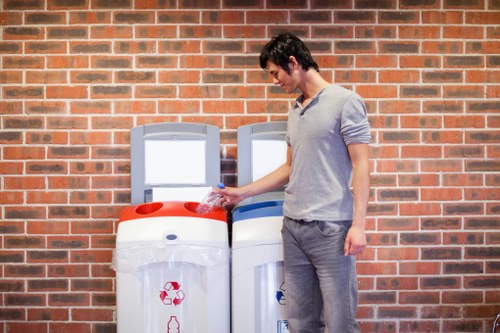
The company promotes recycling and the responsible handling of materials to reduce landfill disposal. Clear separation of recyclable, non-recyclable and potentially hazardous items will be enforced. Waste carriers must ensure transfer to authorised facilities and maintain accurate waste documentation. These measures support environmental compliance and align with best practice in the rubbish removal and waste clearance sectors.
Monitoring, review and continuous improvement
Performance will be monitored through audits, inspections and analysis of incident data. Key performance indicators include number of incidents, training completions and audit findings. This policy will be reviewed at least annually or when operational changes, legislation or significant incidents warrant an earlier revision. Commitment to improvement includes consultation with staff, sharing lessons learned and updating procedures to reflect emerging risks and industry standards.Final statement: The organisation is committed to protecting the health and safety of those affected by office clearance and rubbish removal services. Through clear responsibilities, practical controls, effective training and continuous review, we aim to deliver safe, efficient and environmentally responsible clearance services across our service area.
